The rise of data centres: a timeline
From one machine in one room to warehouse-sized “AI factories” using as much power as small countries.
 Read the story · film coming soonThe world’s data centre boom→
- Milestone
- Turning point
- Australia
- Drag to slide, scroll the strip to zoom, click a marker
- 19461946
The first “data centre”
ENIAC needs its own room, its own power supply and its own cooling: the three things every data centre still has to solve.
- 19641960s
The computer room
Mainframes such as the IBM System/360 move into purpose-built rooms with raised floors, air conditioning and strict access.
- 19691969
Networks arrive
ARPANET links computers at different sites. Where computers sit starts to matter less than how they connect.
- 19851980s
Client–server
PCs on desks talk to servers in back rooms. Every company builds its own small server room.
- 19981998
Colocation
In the dot-com boom, companies such as Equinix (founded 1998) rent space, power and connections in shared “carrier-neutral” buildings.
- 20062006
The cloud
Amazon Web Services launches S3 storage and EC2 computing. Renting servers by the hour changes how software is built.
- 20072007
Energy becomes an issue
A US Environmental Protection Agency report finds data centres used about 1.5% of US electricity in 2006.
1.5%of US electricity, 2006 - 20102010
Cloud rivals
Microsoft launches Azure. Google, Amazon and Microsoft begin building “hyperscale” campuses around the world.
- 20112011
Open Compute
Facebook publishes its data centre and server designs as the Open Compute Project, pushing the industry towards efficiency.
- 20162016
AI cools the data centre
Google says DeepMind’s machine learning cut the energy used to cool some of its data centres by up to 40%.
- 2022Nov 2022
The AI rush
ChatGPT launches. Demand for GPU-packed data centres soars, and power, not floor space, becomes the main constraint.
- 20242024
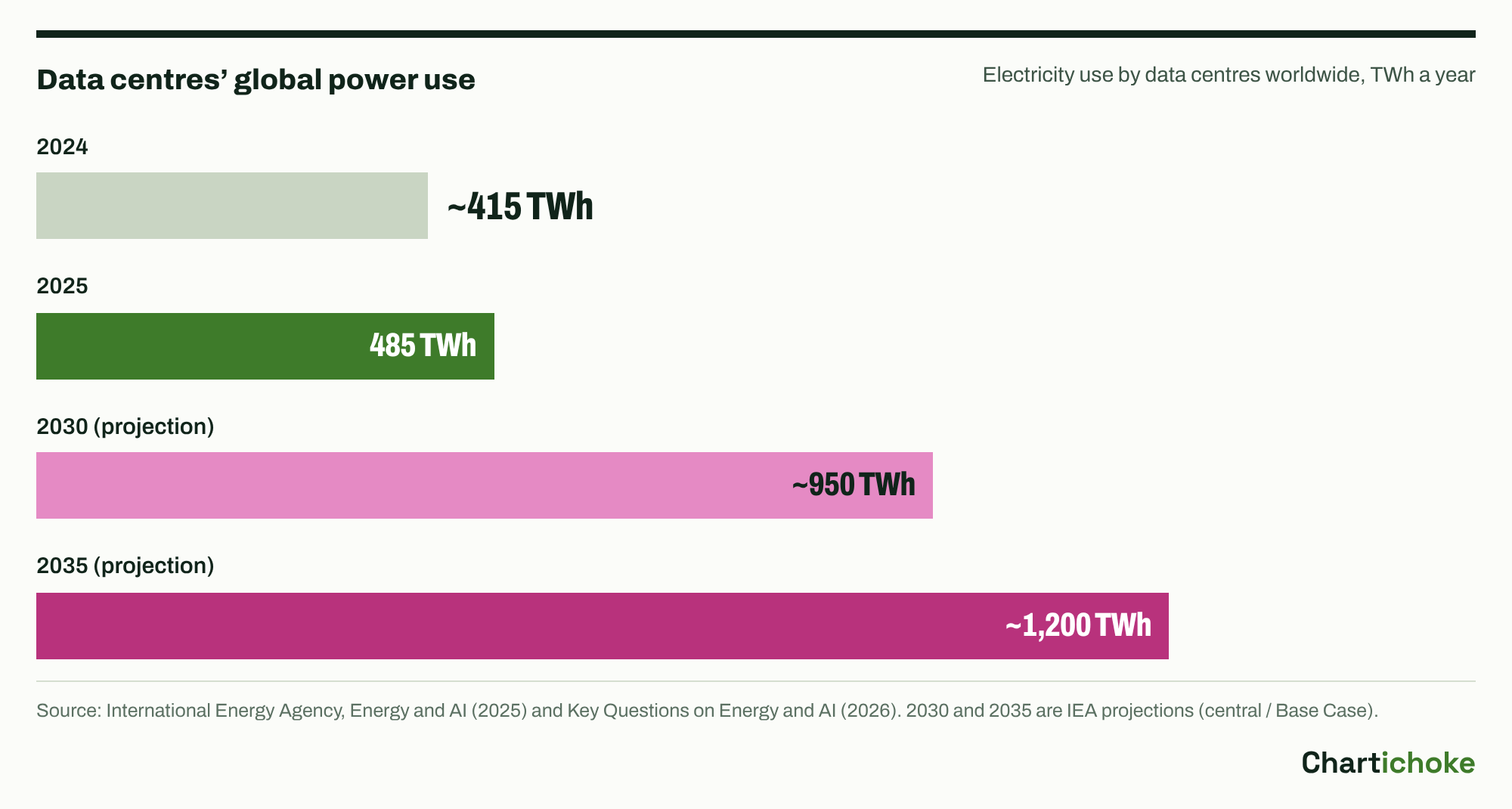
415 TWh
Data centres use about 415 TWh of electricity, roughly 1.5% of the world total. The US uses 45%, China 25% and Europe 15%.
~1.5%of world electricity - 20252025
485 TWh and US$400bn
Global data centre electricity use grows 17% in a year. The five largest tech companies spend more than US$400 billion on capital, with 75% more expected in 2026.
- 20262026Australia
Australia joins the boom
AEMO forecasts Australian data centres will use seven times more electricity within a decade.
- 20302030 (projection)
~950 TWh
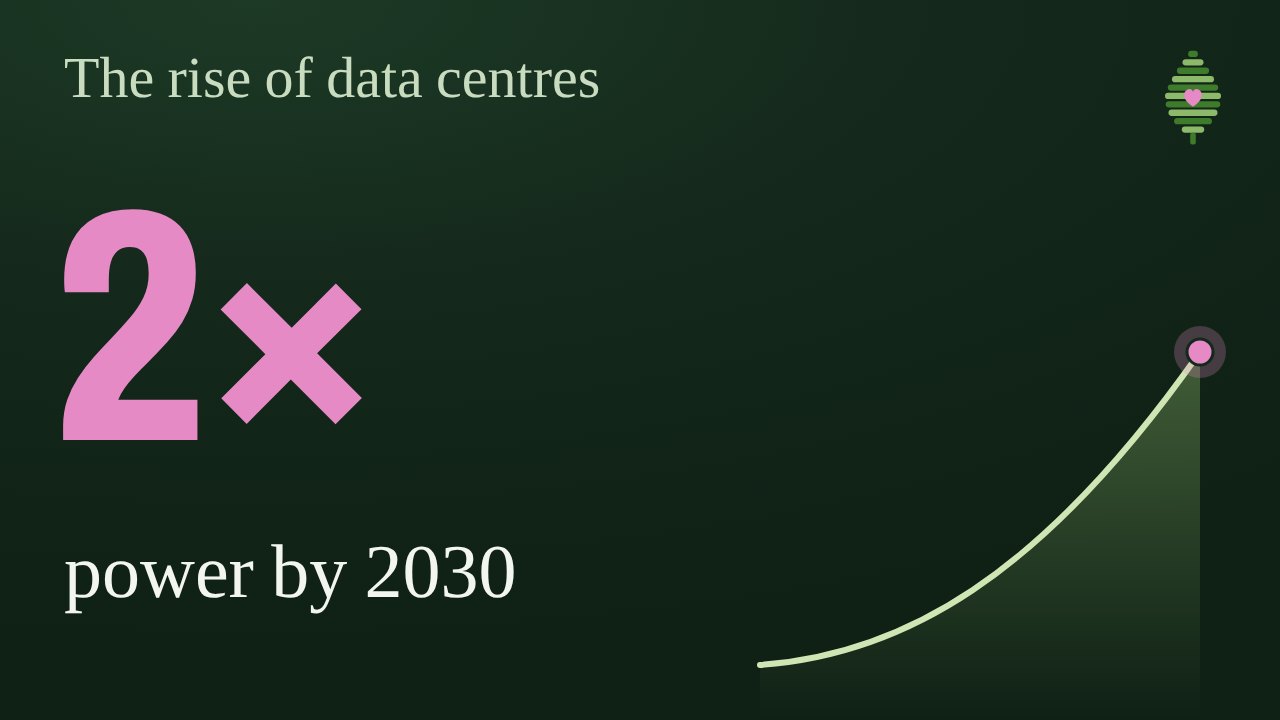
The IEA’s central case has data centre electricity use roughly doubling, with AI-focused data centres tripling their use.
2×data centre power by 2030 - 20352035 (projection)
~1,200 TWh
The IEA’s Base Case sees global data centre electricity use rising to around 1,200 TWh by 2035.
- IEA, Energy and AI (2025)
- IEA, Key Questions on Energy and AI (2026)
- US EPA, Report to Congress on Server and Data Center Energy Efficiency (2007)
- Amazon Web Services (Wikipedia)
- Google DeepMind, AI reduces data centre cooling bill by 40% (2016)
Dates for early events are widely documented; recent figures are labelled with their source, and forecasts are marked as forecasts.