Phones, 4G and a generation: social media and young people
Fast mobile internet put social media in every pocket, including children’s. How it happened, what young people say about it, what the research does and doesn’t show, and why Australia drew a line at 16.
 Read the story · film coming soonSocial media and a generation→
- Milestone
- Turning point
- Australia
- Drag to slide, scroll the strip to zoom, click a marker
Social media existed before smartphones, but it lived on a desk. Three things moved it into young people’s pockets within a few years: the iPhone and Android (2007–08), the front-facing camera (2010) and 4G mobile networks (from 2009 overseas, 2011 in Australia), which made photos and video fast enough to share anywhere.
The apps changed too. Likes, infinite scrolling feeds and, from 2016, feeds ranked by algorithm instead of time turned social media from a way to keep up with friends into a stream designed to hold attention.
What the evidence says, and doesn’t
Reported anxiety and depression among teenagers, particularly girls, rose in several countries from the early 2010s, around the time smartphones and social media became near-universal. Researchers agree on that timing. They disagree, sharply, on how much social media caused it.
One side, led by social psychologist Jonathan Haidt (The Anxious Generation, 2024), argues the phone-based childhood is a major cause: it displaced sleep, play and face-to-face time, and exposed children to comparison, bullying and harmful content. Leaked internal research at Instagram in 2021 found that among teen girls who already felt bad about their bodies, one in three said Instagram made them feel worse.
The other side, including psychologists Candice Odgers and Andrew Przybylski, argues the studies mostly show small correlations rather than causes, that results vary across countries, and that other pressures matter too. A 2023 US National Academies review found the evidence did not support the conclusion that social media causes changes in adolescent health at the population level, while still warning of real risks for some young people.
Both sides agree some harms are real for some young people: cyberbullying, sextortion, harmful content and lost sleep. The argument is about how big the effect is across a whole generation, and what policy should do about it.
What young people say
In Pew Research Center’s US surveys, teens have grown more negative: 48% now say social media has a mostly negative effect on people their age, up from 32% in 2022. And 45% say they spend too much time on it. Many also say it helps them feel connected to friends and supported in hard times.
- 20032003
Myspace
Profiles, friends and music: social networking goes mainstream, on desktop computers.
- 2004Feb 2004
Facebook
Launched at Harvard; it opens to anyone 13 or older with an email address in 2006.
- 20052005
YouTube
Anyone can publish video. It becomes the platform teens use most.
- 2007June 2007
The iPhone
A full web browser and touch screen in a phone. Android follows in 2008, and the App Store opens in July 2008.
- 2009Feb 2009
The Like button
Facebook adds Likes, turning approval into a visible number.
- 2009Dec 2009
The first 4G network
TeliaSonera switches on the world’s first commercial 4G LTE networks in Stockholm and Oslo. Mobile data gets fast enough for photos and video on the go.
- 20102010
Front cameras and Instagram
The iPhone 4 adds a front-facing camera; Instagram launches in October. The selfie era begins.
- 2011Sept 2011Australia
4G reaches Australia
Telstra launches Australia’s first 4G network. Snapchat launches the same year.
- 20122012
A third of teens
Pew finds 37% of US teens have a smartphone, up from 23% in 2011.
37%of US teens - 20152014–15
Nearly three in four
73% of US teens have access to a smartphone; 24% say they are online almost constantly.
- 20162016
Mobile overtakes desktop
Mobile devices pass desktops in global web traffic. Instagram switches to an algorithm-ranked feed, as others do.
- 20182018
Near-universal
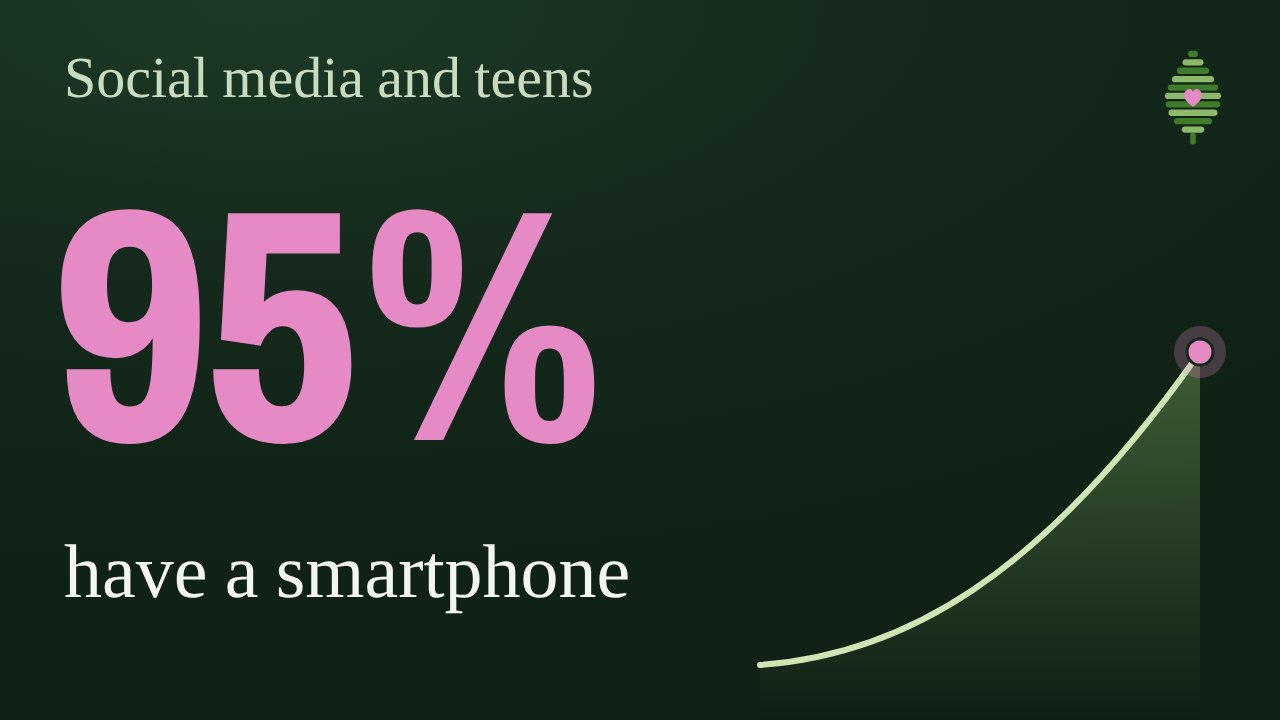
95% of US teens have a smartphone and 45% say they are online almost constantly. TikTok goes global after merging with Musical.ly.
95%of US teens
- 2021Sept 2021
The Facebook Files
Leaked internal research shows Meta knew Instagram made body-image issues worse for some teen girls.
- 2023May 2023
US Surgeon General’s advisory
The Surgeon General warns there is not enough evidence that social media is safe for children. In Dec 2023 a National Academies review finds the population-level evidence for harm unproven, while noting risks.
- 2024March 2024
“The Anxious Generation”
Jonathan Haidt’s bestseller blames smartphones for a youth mental health crisis. Many researchers push back on the evidence. The debate goes global.
- 2024Nov 2024Australia
Australia legislates
Parliament passes the Social Media Minimum Age law, a world first.
- 202510 Dec 2025Australia
The under-16 ban starts
Platforms must take reasonable steps to stop Australians under 16 from having accounts. About 4.7 million accounts are deactivated, removed or restricted in the first weeks.
4.7maccounts - 2026March 2026Australia
Enforcement
eSafety moves to an enforcement stance, finding some major platforms have not done enough to keep under-16s off.
- 2026Aug 2026
Most kids still on
An eSafety study finds more than eight in ten under-16s are still using social media despite the ban. New Zealand introduces its own under-16 bill the same month.
- Pew Research Center, Teens, Social Media and AI Chatbots 2025
- Pew Research Center, Teens and internet, device access fact sheet
- Pew Research Center, 10 facts about teens and social media (2025)
- Pew Research Center, Teens and Technology 2013
- eSafety Commissioner, Social media age restrictions
- eSafety, platforms restrict access to 4.7 million under-16 accounts
- Al Jazeera, Australia’s under-16 social media ban failing, study shows (Aug 2026)
- NBC News, the Haidt–Odgers debate
- Columbia Journalism Review, social media harm and teens
- Simpson Grierson, NZ Online Safety (Minimum Age) Bill (Aug 2026)
Dates for early events are widely documented; recent figures are labelled with their source, and forecasts are marked as forecasts.